


 Save
Save Print
Print
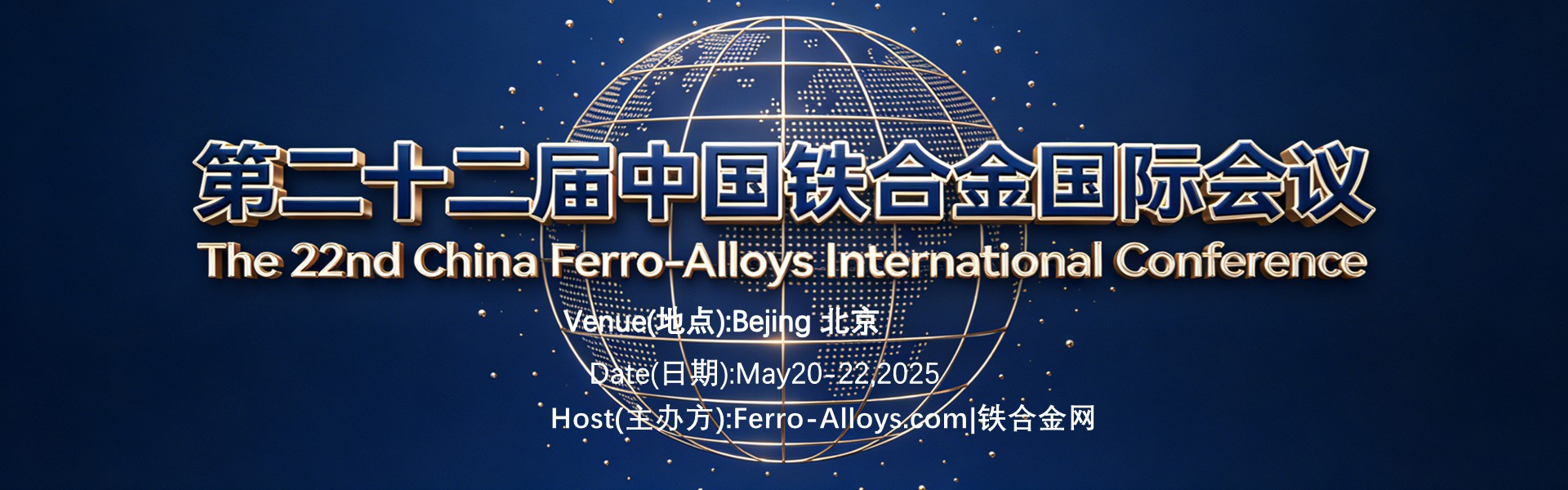
The 22nd China Ferro-alloys International Conference, host ed by Ferro-Alloys.com, will be held on 20 May to 22 May, 2026 in Beijing city, China. We sincerely invite you jointly explore the development ferroalloys trend in 2026. Why Attend?
[Ferro-Alloys.com] OM Holdings Limited (OMH) Shareholder/Analyst Call Transcript
Company Participants
Teck Thye Tan - Group Financial Controller
Ruiqi Ng
Presentation
Teck Thye Tan
Group Financial Controller
Very good morning, everyone, and thank you for attending OM Holdings webinar this morning. My name is Eugene and I am the Group Financial Controller of OM Holdings. Together with me is Ruiqi from the IR department. And together, we will be hosting the webinar this morning. So OM Holdings is a manganese and silicon smelting company with vertical exposure in mining and trading. And we have just released our FY 2025 results announcement on the 27th of February, which was a Friday.
Today, I will run through the key points followed by maybe a short Q&A session. If you would like to submit a question during the webinar, please use the Q&A function at the bottom of your screen. If we are unable to present your question during the seminar, we'll attempt to address the query post the webinar. So without any further ado, I think let's start with the presentation.
So once again, thank you for joining me today for OM Holdings FY 2025 Earnings and Results Presentation. I'll be taking you through our key financials, the market conditions and the midterm trajectory from where we are today. Okay? If you look at the first slide, basically, from the financial perspective, from the top line, our full year revenue came in at USD 636 million, which is about a 3% decline from the previous year due to weakening prices amidst the weakened -- amidst weakened demand and also the global uncertainty. This was in spite of a 6% more volumes traded for both our ores and alloys, which we had ramped up to help control the unit fixed costs. I think looking back, one of the most strategically important things that we did in 2025 was the refinancing of the OM Sarawak project finance loans. Now these loans have existed in one form or another from the inception of the Sarawak project and the refinancing is a meaningful milestone for us.
Let me just take a minute or 2 to highlight this. The original project finance structure was a covenant-type defined amortization facility. In March 2025, which was March last year, we successfully replaced that with new syndicated facilities, which comprise both term and revolving credit facilities. Now this gives us greater flexibility to manage our business and our working capital needs while at the same time, pushing out amortization conservatively given that the current business environment was challenging. Now finance costs, as a result, also fell approximately 20% given more favorable terms under the new loan facility and also from the general declining interest rates.
In all, if you look at the EBITDA, EBITDA was just over USD 50 million, and the profit after tax to shareholders was USD 2.3 million for the full year of 2025. While it's a step down from 2024, it's still a step up from the first half of 2025 where we actually posted a loss. Now the Tshipi asset disposal is also fresh on our minds, correct? With completion having been announced only last Monday. With this, while the P&L impact will only be seen in the first half of 2026 or the first half financials 2026, I'm pleased to announce that the Board of OM Holdings has declared a special dividend of AUD 0.1 per share to thank all shareholders for their support throughout the time that we held this strategic investment in South Africa.
Okay. Moving on to the next slide. Let us take a brief look at the ferro alloy market. Now ferrosilicon has been under sustained pressure with prices declining over the last 3 years. And frankly speaking, going into 2026, it has been more of the same as well. We expect demand-side weakness to continue as the region sheds steel making capacity, and we also expect further competition from Russian material to continue. Now if you look at the Platts pricing, however, we do note that there has been a recovery through the second half of 2025 and this suggests that actions from Chinese custom enforcement has had somewhat of an effect and more importantly, it also suggests the presence of a price floor.
Moving on, I mean, looking at manganese, a typically more nuanced market, all right? We see full year prices for alloys in decline from above -- about USD 950 in Q1 to just about USD 900 by the end of the year. Now having said that, all prices declined as well and margins opened up by the end of last year, given the standard time lag from when we consume ore. Now this has helped improve our margins in the second half of 2025. On the global front, we also see several legacy smelters around the world that have shut their plants for the last time in the last few years. And this includes South Africa, in Korea and also in Australia. And we expect this trend to continue in the next -- probably about next 5 years or so.
Next, I'll touch briefly on our forward production guidance for the year for 2026. On the manganese front, this is generally stable and we expect the same as we did in 2025. On the ferrosilicon front, we expect a modest relative reduction from 2025. We recently reduced production slightly as a commercial response to the current market price environment. At the same time, scheduled maintenance within the Sarawak grid opened up options for our power contract, which is unrelated to our market conditions. Given the alignment of these factors, we took the opportunity to reduce ferrosilicon production for 2026, as you can see on the screen. Please take note that this does not change our long-term power arrangement, nor does it signal any change in our strategy.
Moving on to the next slide. Given how the market environment has changed, our revenue has held up pretty well. However, margins have seen a multiyear decline, falling to approximately 9.8% for 2025. Now this partly reflects the commodity super cycle that push all prices to extraordinary levels in FY 2021. While in reality, what has happened is also that those prices led to a new generation of production capacity, which has now come online. This, coupled with uncertainty in global demand has led to depressed margins.
Now having said that, we believe that parts of the market have turned towards recovery. And as I mentioned earlier, the second half of 2025 tells a very different story compared to the first half, where we posted a loss of USD 9.5 million in 1H 2025. Now some of these reflect one-off items recognized in the second half of 2025. For example, the gains relating to the sale of the OMQ transaction, right? However, even accounting for this, the operational performance in the second half was much stronger than the first. Moving on to the next slide. So looking at our borrowings, right, from our total borrowings, our total borrowings actually lowered marginally last year in 2025. As shared earlier, we completed our refinancing in 2025, March 2025 and replaced the fixed amortization Sarawak project finance facility with both new term loans and also our revolving credit facilities. Now this means total borrowings will fluctuate more as we draw and then repay these revolving facilities, which is not unlike our existing trade lines.
Now given the market uncertainty at the end of last year, at the end of 2025, we maintained slightly elevated levels of utilization, which resulted in only a marginal reduction in total borrowings year-on-year. Now having said that, we expect to deleverage meaningfully in the first half of 2026, given the cash infusion from the Tshipi asset disposal.
Now to summarize the key messages from today's presentation. Our EBITDA of USD 50.7 million demonstrates the operational resilience of the business even in a difficult price environment. Now furthermore, the second half swing of our profit after tax by over USD 10 million demonstrates that the worst of the earnings may be behind us for this cycle, particularly for manganese. With the completion of the Tshipi asset disposal, we expect to continue on the deleveraging pathway and also allow for the special dividend that was declared yesterday. We expect production to moderate slightly this year but we remain optimistic on market pricing as we continue to see production cuts from our competitors.
I think with that short and sharp, I've come to the end of this presentation. Thank you for joining us today. And I think we will take a little bit of time to go over a few questions that have been submitted.
Question-and-Answer Session
Ruiqi Ng
Thank you, Eugene. We will now move on to the Q&A session. So we see a couple of questions. And the first question actually asked if there were any plans to attract market interest by issuing a onetime special dividend following the Tshipi sales?
Teck Thye Tan
Group Financial Controller
Yes. Yes. So thanks, Ruiqi. Yes. So actually, we announced a special dividend just yesterday following the completion of the Tshipi asset sale transaction. And we have also received the considerations, the funds of the sales -- from the sales proceeds as well. Based on this, I think the Board has declared a special dividend of AUD 0.1 per share to reward shareholders for their continued trust and support to the company over the last many years.
Ruiqi Ng
Okay. Thank you, Eugene. So the next question we have asked about the plan for capital allocation from the proceeds from the Tshipi sales?
Teck Thye Tan
Group Financial Controller
Yes. Okay. So upon receiving the proceeds, I think from internal planning, the proceeds from the Tshipi sale as said, will first be deployed primarily to pay down our debt to reduce our debt levels. In the immediate term, I think we are looking to pay down the most expensive and longest outstanding borrowing and balances to further reduce our financing costs. Because we now have facilities of revolving nature, right, in the refinancing, we maintain -- we then can maintain the flexibility to withdraw on these revolving facilities and redeploy proceeds at the right time when it is required.
Ruiqi Ng
Thank you, Eugene. The last question that we have asked if the war and fear affects the company?
Teck Thye Tan
Group Financial Controller
Yes. It's quite unfortunate to see what's happening right now in the Middle East. But I think the war in the Middle East has seen air and seaborne routes being affected a lot of routes are being diverted. And as a result of this, I think we see elevated freight levels and uncertainty in shipping, especially for us. But we are otherwise -- apart from that, we are otherwise not significantly affected by the war at the moment. Naturally, we will continue to monitor the general market conditions, the situation in the Middle East, and then we will adjust our plans accordingly.
Ruiqi Ng
Okay. Thank you, Eugene. That appears to cover the majority of the questions from our audience today. If you have any further questions, please forward them to investor.relations@ommaterials.com. We will make a recording of this webinar available via OM Holdings LinkedIn in the coming days. This concludes our webinar for today. Thank you, everyone, for attending. Thank you, Eugene.
Teck Thye Tan
Group Financial Controller
Thank you very much. SP1 Thanks, Ruiqi. Thank you, everyone.
OM Holdings Limited (OMHLF) Shareholder/Analyst Call March 9, 2026
- [Editor:tianyawei]
 Daily News
 Research
 Magazine
 Company Database
 Customized Database
 Conferences
 Advertisement
 Trade
Trade
.jpg)

 Online inquiry
 Contact


Tell Us What You Think