


 Save
Save Print
Print[Ferro-Alloys.com] Wandanya Pilot Scale Dense Media Beneficiation Delivers a High-Grade 41% Mn Product
• Pilot scale Dense Media Separation (DMS) beneficiation generated high-quality manganese products with high recoveries.
• The DMS results are: o Blend 1: feed grade of 32.4% Mn upgraded to 41.0% Mn at a 2.8 g/cm3 density
Blend 2: feed grade of 29.4% Mn upgraded to 38.5% Mn at a 2.8 g/cm3 density.
• Mn recoveries for Blends 1 and 2 ranged between 82% and 80% with low penalty elements associated with the beneficiated Mn products.
• High-grade concentrates produced via DMS using a low-density media of 2.8 g/cm3 is comparable to industry standard dense media processing.
• This larger scale DMS testwork follows the staged heavy liquid separation (HLS) testwork and firm up positive grade-recovery characteristics previously reported from blended low, medium and high-grade feeds.
• The beneficiation testwork programs completed on the Wandanya drill core will be used to inform the upcoming Scoping Study and is complementary to the direct ship ore (DSO) strategy.
• RC drill rig to mobilise to site in August to continue resource expansion to the north and south.
Black Canyon’s Managing Director Brendan Cummins said:
“The pilot scale testwork has confirmed the Wandanya manganese feeds can be beneficiated to a high-grade product using simple dense media processing. Simply put, for these blended feeds, we have been able to successfully apply a processing technology similar to those used in mining operations. This is a key milestone achievement for Wandanya and the Companies ambition to develop the project.
“The larger scale DMS trial completed on the Wandanya blended feedstocks reinforces our confidence in the manganese oxide mineralisation to upgrade to highly marketable products. The manganese recoveries demonstrated by the testwork at around 80% are also strongly positive for both blends.
“With the successful completion of the initial metallurgical testwork programs and subject to the results of the mineral resource estimate we will be able to apply these grade/recovery outcomes to our planned Scoping Study where we will examine the development of a dual commodity operation consisting of DSO iron, DSO manganese and beneficiated manganese.”
Australian manganese explorer and developer, Black Canyon Limited (Black Canyon or the Company) is pleased to announce the Stage 4 blended composite pilot scale DMS testwork results. This round of DMS testwork follows the initial Stage 1 screen/assay program, Stage 2 sighter level HLS and Stage 3 blend feed HLS applied to low, medium and high-grade feeds from multiple PQ3 diamond drill core composites from across the Wandanya Project.
The Stage 21 and 32 sighter level programs and Stage 4 pilot scale DMS testwork have demonstrated the amenability of the mineralisation discovered at Wandanya to potentially produce multiple products;
1. DSO between 42% and 44% Mn which reduce operating costs and can be used to efficiently upgrade manganese products that don’t achieve specification.
2. Blended medium and low-grade feeds to produce a 38.5% Mn concentrate or a combined low, medium and high-grade feed to deliver a 41.0% Mn beneficiated concentrate.
3. An overall product specification with low impurities and high recoveries.
4. Potential to further improve overall recoveries with additional processing of fines.
The completion of this intensive phase of metallurgical testwork has greatly improved the knowledge of the grade-recovery characteristics across multiple grade ranges and blended feedstocks.
Wandanya Project Metallurgical Testwork (BCA 100%)
Stage 1 and 2
Testwork samples were selected from the PQ3 diamond core drill program completed in November 20253. Representative examples of mineralisation were collected focusing on the mineralisation type, geology, grade and spatial distribution along the 3km base case zone of mineralisation, which is currently the target of resource development. The PQ3 holes twinned previously drilled Reverse Circulation (RC) drill holes and a total of 22 diamond (DD) core holes were completed for 298m. Refer to Appendix 1 for the diamond drill collar listing and Appendix 2 for JORC Table 1 information.
Stage 14 of the metallurgical testwork program comprised the collection of representative master composite samples, followed by crushing and homogenisation to ensure consistent and reliable feed material for subsequent testwork. The master manganese composite head grades for the testwork are provided in Table 1.
Table 1: Head grade assays from the manganese oxide (MnO) composites
|
Manganese Composites |
Mn |
Fe |
Al |
Si |
Ca |
K |
Mg |
Ba |
P |
LOI |
|
|
(%) |
(%) |
(%) |
(%) |
(%) |
(%) |
(%) |
(%) |
(%) |
(%) |
|
Low Grade MnO |
24.4 |
6.09 |
3.13 |
14.4 |
0.76 |
1.24 |
1.36 |
0.45 |
0.01 |
11.03 |
|
Medium Grade MnO |
30.9 |
6.85 |
3.15 |
9.9 |
0.93 |
1.19 |
0.95 |
0.93 |
0.01 |
12.15 |
|
High Grade MnO |
45.0 |
3.15 |
1.3 |
3.6 |
1.59 |
0.94 |
1.07 |
1.5 |
0.01 |
13.65 |
Following on from the initial crush/screen and assay testwork, the low, medium and high-grade Mn oxide composites were submitted to Stage 2 HLS testwork to demonstrate the potential bene?ciated grades and associated recoveries for each grade range. Stage 3 examined the grade/recovery
aracteristics of blended low, medium and high-grade feedstocks.
Stage 4 – Pilot Scale DMS applied to Blended Composites
Two blended 100kg composites were created from combinations of the Stage 2 low, medium and high grade manganese composites. The blends were formulated based on recovery, beneficiated Mn grade and proportioned in ratios reflecting the current geometallurgical understanding of the discovery. To accommodate the DMS sizing criteria, the two blends were crushed to 10mm and screened at 1mm to remove the fines, however the fines were included in the overall recovery calculation.
The blends comprised:
• Blend 1: composite generated from low/medium/high grade in the proportions of 20%/60%/20% respectively.
• Blend 2: composite generated from low/medium grade in the proportions of 25%/75% respectively.
Both blend feeds demonstrated Mn grade increases using 2.8g/cm3 dense media with product grades close to or above 40% Mn. The recoveries ranged between 80% and 82% which were consistent with the Stage 3 HLS testwork using the lower 2.8g/cm3 dense liquid. The densities selected by BCA are in line with those used at the operating Woodie Woodie and Groote Eylandt manganese mines in Australia.
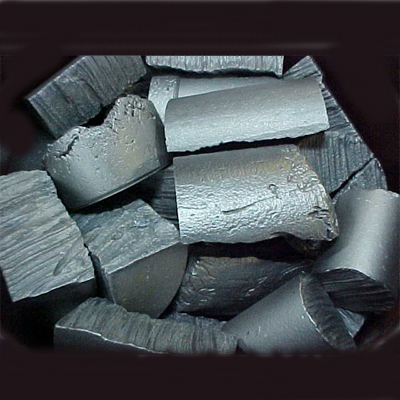
The DMS results are displayed in Table 2, Figure 1 shows the Blend 1 & 2 manganese products. Table 3 summarises the beneficiated Mn product specifications from the MnO samples tested.
Table 2: DMS testwork summary of results from the blended MnO composites
|
Blend Composite |
Sample type |
Assayed head Mn (%) |
Size fraction |
DMS Results |
||
|
Density Parameter |
Mn (%) Sinks |
Mn Recovery (%) Sinks |
||||
|
Blend 1 - composite of LG/MG/HG MnO |
PQ3 diamond core |
32.4 |
+1mm - 10mm |
SG 2.8 |
41.0 |
82 |
|
Blend 2 - composite of LG/MG MnO |
PQ3 diamond core |
29.3 |
+1mm - 10mm |
SG 2.8 |
38.5 |
80 |
Table 3: DMS testwork product element analysis from the blended MnO composites.
|
Blend Composite |
Density Parameter |
Beneficiated Mn Specification |
||||
|
Mn (%) |
Fe (%) |
Al (%) |
Si (%) |
P (%) |
||
|
Blend 1 - composite of LG/MG/HG MnO |
SG 2.8 |
41.0 |
6.5 |
1.6 |
5.0 |
0.02 |
|
Blend 2 - composite of LG/MG MnO |
SG 2.8 |
38.5 |
7.5 |
1.9 |
6.0 |
0.02 |
Next Steps
Further metallurgical testwork is planned to confirm and optimise the preliminary DSO and DMS flow sheet designs suitable for use in feasibility related studies.
Ongoing Exploration Activities at Wandanya
• The WA Government Exploration Incentive Scheme (EIS) co-funded detailed gravity survey5 has commenced over the Wandanya discovery to test for deeper manganese targets potentially related to hydrothermal manganese mineralisation
• Awaiting assays with results expected over the next 2 to 4 weeks from the completed resource definition drilling program.
• Planned exploration drilling will continue to evaluate the 1.4km and 2.8km targets to the south and north respectively with the RC drill rig expected to return in August.
• Test water bores to be drilled following completion of the resource expansion drill programs
• Inputs for the maiden Mineral Resource Estimate (MRE) are being collated including LIDAR, DGPS collar pickups and down hole density surveys. The maiden MRE is on track for September 2026, and a Scoping Study is scheduled for completion in Q4 2026.
- [Editor:tianyawei]
 Daily News
 Research
 Magazine
 Company Database
 Customized Database
 Conferences
 Advertisement
 Trade
Trade


.jpg)

 Online inquiry
 Contact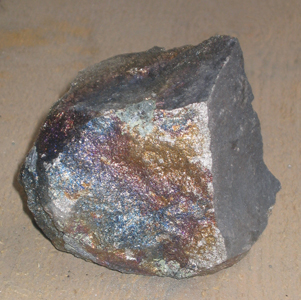


Tell Us What You Think