


 Save
Save Print
Print

The 22nd China Ferro-alloys International Conference, host ed by Ferro-Alloys.com, will be held on 20 May to 22 May, 2026 in Beijing city, China. We sincerely invite you jointly explore the development ferroalloys trend in 2026. Why Attend?
[Ferro-Alloys.com] Mineral royalties hit record US$500m as Ghana strengthens revenue from mining sector
The Minerals Income Investment Fund has announced that Ghana recorded a historic US$500m in mineral royalties in 2025, marking a 10.8 percent increase from the previous year and underscoring the growing importance of the mining sector to the country’s public finances. The strong performance reflects improved regulatory compliance, rising commodity prices and stronger monitoring across Ghana’s mining value chain.
The latest figures indicate that royalties from mining operations continued to rise despite fluctuations in production levels in some segments of the industry. The Minerals Income Investment Fund said the increase demonstrates the impact of reforms and closer collaboration with institutions such as the Minerals Commission, the Ghana Revenue Authority and other regulatory agencies responsible for monitoring mineral production and revenue collection. These partnerships have helped broaden the royalty base and reduce leakages in the system.
Gold mining remained the dominant contributor to the country’s mineral royalty earnings. Ghana, which is Africa’s largest gold producer, relies heavily on the precious metal as a major source of export revenue and foreign exchange. According to industry data, large scale gold mining generated the largest share of royalty inflows during the year, reflecting both strong global gold prices and sustained output from major mining operations. By the end of the third quarter of 2025 alone, royalties from large scale gold mining had reached about US$291.87 million, representing a 40.18 percent increase compared with the same period in 2024.
The mid tier gold mining segment also recorded notable gains during the period. Royalties from this category increased from about GH¢40.61 million in the previous year to approximately GH¢59.44 million in 2025, representing growth of more than 46 percent. Analysts say this rise reflects stronger operational performance among medium sized mining firms as well as improved compliance with royalty obligations.
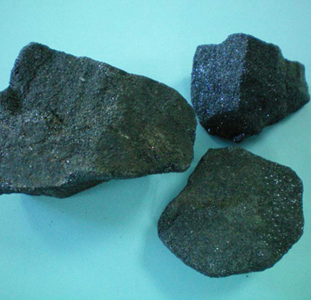
Another standout performer was the manganese sector, which posted the most dramatic increase in royalty receipts during the year. Payments from manganese mining surged by about 170 percent, climbing from US$4.72 million in 2024 to approximately US$12.75 million in 2025. The sharp increase has been attributed to higher production volumes and improved enforcement of royalty payment regulations among operators in the sector.
Other mining subsectors also contributed to the positive trend in royalty collections. The quarry industry recorded a 13.12 percent increase in royalties, rising from GH¢11.62 million to about GH¢13.15 million within the same period. Meanwhile, the sand mining subsector experienced a 21.48 percent increase, with receipts climbing from roughly GH¢364,998 to more than GH¢433,406.
Officials at the Minerals Income Investment Fund say the performance demonstrates the effectiveness of ongoing efforts to ensure that Ghana derives greater value from its natural resources. The fund was established by the government to manage and invest mineral royalties and other mining related revenues for the long term benefit of the country. Its mandate includes using these funds to support strategic investments in the mining sector while also generating wealth for future generations.
Chief Executive Officer Justina Nelson has described the surge in royalty inflows as encouraging, noting that the results provide motivation for the fund to deepen its engagement with stakeholders across the mining industry. She emphasised that MIIF will continue to work closely with mining companies, regulators and other institutions to ensure full compliance with royalty obligations while strengthening transparency and accountability in the sector.
Beyond revenue collection, the fund has also been expanding its investment portfolio across Ghana’s mineral value chain. MIIF has taken equity stakes in several mining related ventures and strategic projects aimed at increasing Ghanaian participation in the industry. These include investments in gold mining operations as well as emerging minerals such as lithium and graphite that are expected to play a key role in the global energy transition.
The fund has also supported initiatives to develop mineral based industrial projects, including large scale salt production ventures and processing facilities intended to add value to Ghana’s natural resources before export. Officials say such investments are designed to transform the country from a primarily raw mineral exporter into a hub for mineral processing and industrial development.
Industry observers believe the continued growth in mineral royalties could strengthen Ghana’s fiscal position if managed effectively. Mining remains one of the country’s most important economic sectors, accounting for a large share of export earnings and government revenue. However, policymakers have long faced pressure to ensure that the benefits of mineral wealth are distributed more broadly across the economy and used to support sustainable development.
With mineral royalties reaching record levels in 2025, authorities are increasingly focused on improving governance in the sector while pursuing policies that enhance domestic value addition and investment in critical minerals. The Minerals Income Investment Fund says it will continue to strengthen oversight and collaboration with regulatory bodies to ensure that Ghana maximises the economic benefits of its vast mineral resources.
GHEITI SETS DISCOURSE ON NEW MINERAL ROYALTY REGIME IN CONTEXT
The Ghana Extractive Industries Transparency Initiative (GHEITI) has followed keenly the ongoing
public debate on Ghana’s new mineral royalty regime, and wishes to make a few observations to set the
debate in its proper perspective:
Background / Context
1. GHEITI wishes to point out that, sliding-scale royalty regime is not new in Ghana. As far back as in 1986, through section 22 of the Minerals and Mining Act, 1986 (PNDCL 153), further clarified by the Minerals (Royalties) Regulations, 1986 (L.I. 1340) and 1987 (L.I. 1349), Ghana established a mineral royalty sliding scale of 3% - 12%, with triggers for moving up and down the scale linked to mine profitability, expressed as Operating Ratio.
2. In 2006, through section 25 of the Minerals and Mining Act (Act 703) the royalty regime was varied by replacing the range of 3% - 12% with 3% - 6%. Subsequently, the section was amended to impose a flat rate of 5% under Act 794 of 2010.
3. The royalty regime was varied from 3% - 12% to 3% - 6% and subsequently to a flat rate of 5% under Act 794, and then revised again in 2015 to grant the Minister of Lands and Natural Resources the discretion to determine the rate.
4. The 2015 amendment provided that in the absence of a prescribed royalty rate, the existing rate (5%) would be deemed the effective rate.
The Problem with the Previous Sliding Scale Regimes
5. GHEITI’s reports over the period established severe challenges with the implementation of the sliding scale royalty regime. It observed that companies mostly paid the lowest band of the scale (3%) regardless of changes in market conditions.
6. The difficulty in enforcing full compliance with the previous sliding scale regimes arose from the complexity in calculating the Operating Ratio, compounded by the generous capital allowances allowed as part of the computation.
7. GHEITI therefore proposed two options for reform consideration: either a simple model that would tie rates on the scale to price movements, or a fixed rate of 6%, which was the maximum within the range then.
8. The Government opted for the fixed rate, and following intense industry push back, it settled on 5%.
9. The problem of fixed rate royalty regimes pose is that, either, it can be onerous for the payer when profitability, with product price as the indicator in this instance, is low, or it can deprive the resource owner the opportunity of capturing a fair share of economic value during periods of boom.
10. A good mitigation measure would have been the introduction of an extra-profit or windfall tax, which was considered in 2008 but countered by industry on account of depressed prices at the time. The gold prices at the time hovered between US$800 and US$1,000 per ounce.
The New Sliding Scale and Matters Arising
11. Government’s introduction of the new mineral royalty sliding scale is, as established, pursuant to equity in the distribution of the benefits generated between the State as the owner of the resource and investors.
12. The new mineral royalty regime pegs the applicable royalty rate to price movements, with the highest band of 12% pegged at US$4,500 per ounce of gold, and the lowest of 5% pegged at US$1,900 per ounce of gold. Effectively, all mining companies, with the exception of those with subsisting Development Agreements (Zijin, AngloGold Ashanti, and Gold Fields), will now transition to the new royalty regime of 5% to 12%.
13. GHEITI views the new regime as fair in principle, as it allocates risks and rewards equitably, and especially given the absence of a windfall tax provision in the country’s laws. However, it has concerns about how the bands were established. Industry Concerns
14. Suggestions that the industry is opposed to the principle of sliding scale are at variance with the industry’s official position, as made known to GHEITI through its representative on the Multi-Stakeholder Group (the governing body) and publicly communicated by the Ghana Chamber of Mines. While the Chamber appreciates the policy considerations underpinning the proposed reform, it has expressed significant concerns about the design and calibration of the royalty bands. Specifically, it deems the bands to be overly aggressive and inflexible in sliding downwards to accommodate lower prices, as the minimum rate of the new regime is identical to the existing regime’s rate.
15. Again, suggestions that Ghana is being threatened by the US, China, and other countries following this decision is far from the truth.
16. GHEITI is aware there have been overtures made to government to reconsider its decision, but it is far-fetched to consider these as threats.
17. A major concern of both industry and some development partner countries is the transition thresholds between the royalty bands, where roughly every US$500 increase in the gold price leads to a 1% rise in the royalty rate.
18. It is GHEITI’s view, that the industry’s proposal of a sliding scale, with a royalty range of 4% - 8% and an additional 1% placed in a fund to cater for community development, ought to have been explored further for mutual accommodation. We encourage the industry, represented by the Chamber of Mines and the Ministry of Lands and Natural Resources, to continue engaging with a view to finding that common ground, which advances government’s revenue optimization objective without sacrificing industry competitiveness.
19. GHEITI wishes to point out that the biggest threat to Ghana’s investment attractiveness is not necessarily the newly prescribed mineral royalty, but fiscal predictability and certainty, which are essential for long-term planning. The sudden introduction of the Growth and Sustainability Levy (GSL) without prior consultation with industry was disruptive to corporate investment planning. At 3% of gross production (approximately 4.6% when expressed in royaltyequivalent terms due to its non-deductibility), the continued application of the GSL alongside the new royalty regime would significantly increase the fiscal burden on gross production, raising it to over 16%, a level that is unprecedented in global mining fiscal regimes. GHEITI’s Recommendations
20. GHEITI recommends to both government and industry to continue dialoguing and exploring options for mutual accommodation even as government pursues its revenue optimization agenda, without impairing operational sustainability and competitiveness of the mining industry.
21. Government should consider, as a matter of urgency, the complete withdrawal of the GSL to reduce the fiscal burden mining companies carry as a result of the new royalty regime.
22. The Minister for Lands and Natural Resources should also consider introducing a reduced mineral royalty regime for small-scale miners, to get them into the tax/royalty-paying pool, while at the same time creating a necessary favourable business climate of such indigenous businesses.
- [Editor:tianyawei]
 Daily News
 Research
 Magazine
 Company Database
 Customized Database
 Conferences
 Advertisement
 Trade
Trade




Tell Us What You Think